
ETHIOPIA
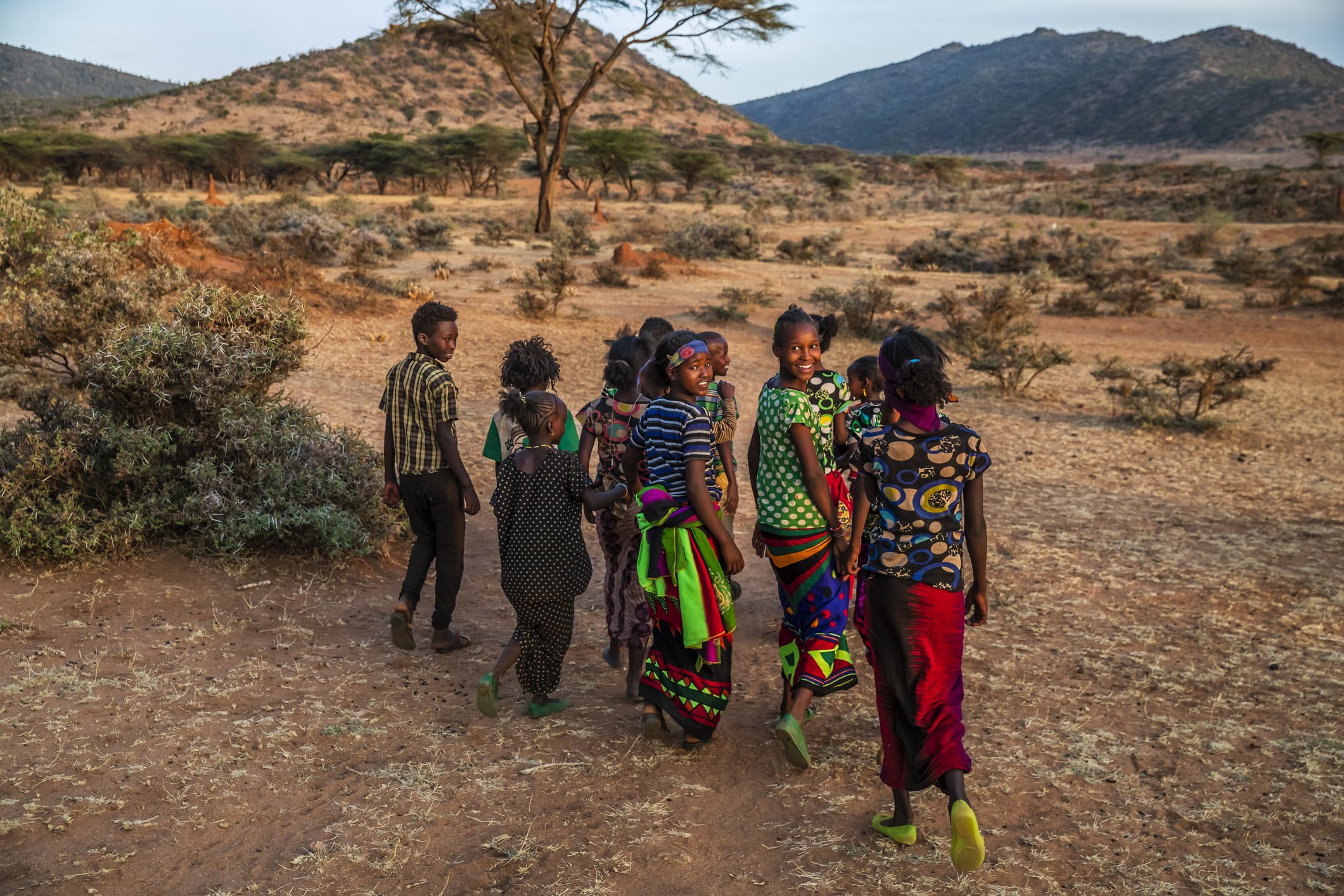
Ethiopia is one of the poorest countries in the world and remains challenged by the need to create economic opportunities for its fast-growing population. Community conflicts and extreme climate conditions have resulted in large scale forced internal displacement (more than 3 million persons displaced in 2019). Over last years, due to political instability and escalating conflicts in neighbouring countries (e.g. Eritrea, Somalia, South Sudan and Sudan) hundred thousands refugees have taken refuge in Ethiopia.
Open-door policy for refugees
Ethiopia is a country of destination, transit and origin for refugees, asylum seekers and migrants, and hosts one of the largest refugee population in Africa. As of September 2020, 792,030 refugees have been registered by UNHCR, nearly half of them coming from South Sudan. Yet, many refugees have been living in Ethiopia for protracted periods and, in some cases, for over twenty years.
Ethiopia maintains an open-door policy for refugee inflows into the country and allows humanitarian access and protection to those seeking asylum in its territory.
Nearly 99% of refugees are required to live in camps or settlements with limited job and livelihood opportunities. Some refugees only are permitted to reside in urban areas for medical protection and humanitarian reasons.
Finnish Refugee Council in Ethiopia
Through its work, FRC will aim at empowering target groups – i.e. refugees (in and out of camps) and host communities – by the access to functional literacy and technical skills adequate to the context where they live to positively transform their lives.
FRC got registered in Ethiopia in June 2019 and set up its country office in August 2020. FRC first project started in September 2020 in Gambella Region, which is located in the South West of the country, borders South Sudan and hosts more than 350,000 South Sudanese refugees in 7 camps.
The realization of the right to education, at the centre of FRC’s strategy, appears to be particularly relevant for South Sudanese refugees, considering the exceptionally high illiteracy rate among them; the literacy rate in South Sudan is the third lowest in the world, 27% only (female literacy rate being 16%, and male 40%).
Finnish Refugee Council is committed to supporting the realization of the UN’s Sustainable Development Goals in all its projects. Read more about the SDG’s that guide our work and activities.
Project Summaries
Essential life-saving humanitarian support for conflict affected and internally displaced people (IDPs) in North and South Wollo Zones, Amhara region, Ethiopia
Approximately 28.6 million people are expected to need humanitarian assistance in Ethiopia in 2025, namely 22% of the total population. The project is implemented in North and South Wollo zones of Amhara region, Northern Ethiopia, currently hosting around 74,379 internally displaced persons from different parts of the country fleeing the ethnic based conflicts. These areas are largely left out of any aid operations due to critical humanitarian funding gap in the country. The project delivers multipurpose cash assistance to 420 households and essential water, sanitation and hygiene kits to 560 households. The project considers protection, disability inclusion and gender mainstreaming across all activities and community and government stakeholders and service providers are trained on coordinated sexual and gender based violence response services, peer counselling groups, SGBV and psychosocial support response and/or referral services will be provided and dignity kits distributed. The project will directly target over 13,500 people (10% from host communities) from four conflict-affected Woredas representing 10% of the total number of IDPs and host community members living in the target area. The implementation will be done in co-operation with WE-Action, a national non-governmental organisation.
Budget: 428 000 EUR
Duration: 7 months
Start date: 1st of May 2025
Type/Sector: Humanitarian assistance/Multi-sectoral
Donor: Ministry for Foreign Affairs of Finland – Humanitarian office
Inclusive Functional Education and Livelihoods Programme for Refugees in Ethiopia 2022-2025
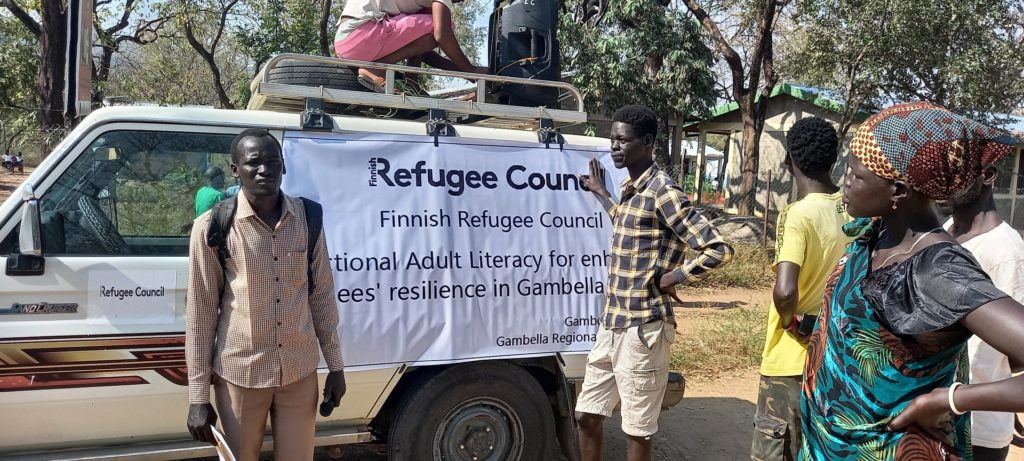
The project aims at ensuring access to Functional Adult Literacy (FAL) and English for Adults (EFA) for vulnerable refugees and host community members. Functional literacy is expected to bring about positive effects on targeted learners, especially empowering targeted women and PWDs. FRC intervention targets Jewi, Kule, Tierkidi, Ngunyuyel refugee camps and host communities in Gambella Regional State, which hosts South Sudanese refugees. Basic literacy course is organized in the students’ own mother tongue, which provides the best potential for learning. The overall estimated number of adults attending the FAL and EFA courses is 8,000. Besides, at least 280 peer literacy facilitators, selected from target communities, will be trained to manage the courses. 20% of the learners are from host communities and 80% from refugee communities.
Livelihood support include financial and business skills trainings, and practical, employable skills trainings, such as IT skills trainings, for refugee populations in Gambella and Addis Ababa City. 2600 individuals are planned to directly benefit from the livelihood activities.
Budget: EUR 1,873,000
Duration: 4 years
Start date: 1.1.2022-31.12.2025
Type/Sector: Development cooperation/Livelihoods and Functional Adult Literacy
Donor: Ministry for Foreign Affairs of Finland – Unit for Civil Society


Stories from Ethiopia

Functional adult literacy training gives hope of a better future in Ethiopia
Riek yat Wich Duel, 57, recalls the moment his village was caught in the middle ...
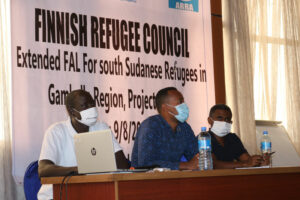
Functional literacy trainings in Ethiopia reinforce FRC’s targeted support to vulnerable groups
Finnish Refugee Council’s Adult Education project began in Ethiopia in April 2021, when it was ...
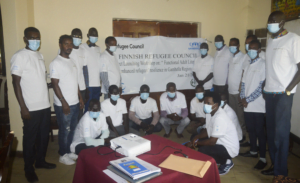
Functional Literacy training for more than 1,200 adults – Study Groups in Ethiopia began in April
Functional Adult Literacy (FAL) study groups in Ethiopia began operating in April 2021. The study ...
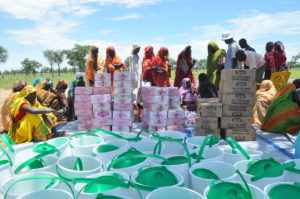
Sudden, but predictable conflict in Ethiopia
A conflict between the federal government of Ethiopia and forces in its northern Tigray region ...
Ethiopia Office:
Kirkos Sub City, Woreda 02
Degafie building 3rd Floor House No. 226
Addis Ababa